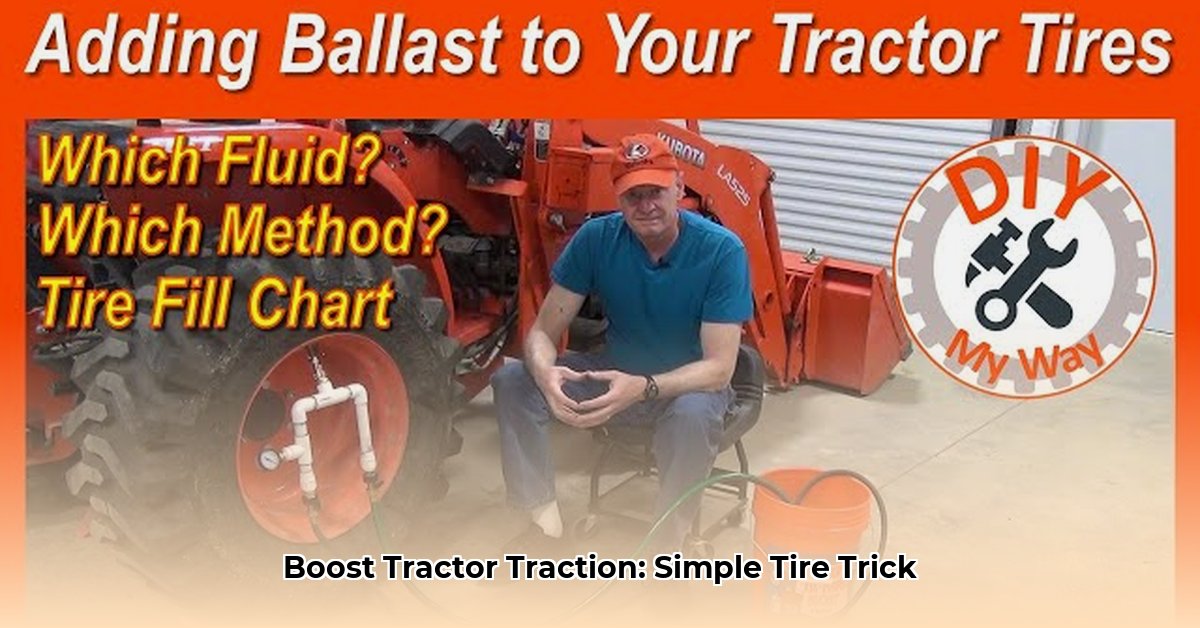
Getting optimal traction from your tractor starts with properly filled tires. This comprehensive guide provides a step-by-step process, covering various filling materials and crucial safety precautions. Improving your tractor's grip translates to increased efficiency and safety on the farm. Let's get started! For more on tire sizes, see our tire size guide.
Choosing the Right Tire Fill Material
Selecting the appropriate material depends on factors such as climate, budget, and desired lifespan. Several options are available, each with its advantages and disadvantages. Choosing wisely ensures optimal tire performance and longevity.
| Filling Material | Advantages | Disadvantages | Ideal Climate & Use |
|---|---|---|---|
| Water | Inexpensive and readily available; easy to obtain. | Freezes in cold temperatures; adds significant weight. | Mild climates; short-term use only |
| Antifreeze (Propylene Glycol) | Effective in colder climates; better freeze protection than water. | Potentially harmful to the environment; may damage tires over time (some formulations). | Colder climates; longer-term use (use caution!) |
| Calcium Chloride | Effective in extremely cold climates. | Highly corrosive, potentially damaging equipment. | Extremely cold areas (use with extreme caution!) |
| Polyurethane Foam | Durable, long-lasting, won't freeze; optimal choice | Expensive; professional installation usually required. | Long-term use; all climates; high-value equipment |
Consider water as a quick, budget-friendly solution for warmer climates. Polyurethane foam offers a premium, long-term solution, best suited for professional installation. Antifreeze and calcium chloride present viable alternatives for colder climates, but careful consideration regarding potential drawbacks is necessary. Always consult your tractor's manual for specific recommendations.
Filling Your Tractor Tires with Liquid: A Step-by-Step Guide
Prioritize safety! Always refer to your tractor's owner's manual before starting. This guide provides general instructions; variations may exist depending on your specific equipment.
Gather Supplies: Collect your hose, chosen ballast fluid, measuring tools (if mixing), and safety glasses. Preparation minimizes delays and ensures a smoother process. Shouldn't this be pretty straightforward?
Inspect Tires: Carefully examine tires for punctures, cracks, or other damage. Repair any issues before filling. Filling a damaged tire can worsen the problem, leading to potential tire failures.
Locate the Valve: Find the valve stem, usually located on the inside of the tire under a protective cap. Remove the cap to access the valve. This simple step is crucial for successful filling.
Attach the Hose: Securely attach the hose to the valve stem; ensure a tight connection to prevent leaks and spillage. A poorly attached hose can lead to inefficient fluid transfer and potential wastefulness.
Fill Slowly: Gradually add the ballast fluid, monitoring the tire's fullness. Overfilling can damage the tire. Overfilling is as harmful as underfilling.
Pressure Check: Use a reliable pressure gauge to check the tire pressure. Maintain pressure within the maximum limit stated on the tire's sidewall. Accurate pressure monitoring is vital for optimal performance and safety.
Repeat for Other Tires: Repeat steps 4-6 for all tires. Consistency in filling ensures even performance across all tires. This is key for proper traction and overall stability.
Clean Up: Clean up any spills immediately and dispose of waste materials responsibly, following local regulations. Proper cleanup maintains a safe and organized working area.
Filling Your Tractor Tires with Foam: A Professional Approach
Foam filling is best left to professionals due to the specialized equipment and expertise required. Improper foam filling can cause damage to your tires.
Contact a Professional: Contact a tire service provider specializing in foam filling. Choosing a professional ensures proper installation and mitigates risks.
Schedule an Appointment: Schedule a convenient time for professional service. Professional installation often requires advance scheduling.
Professional Inspection: Allow the technician to inspect your tires for suitability before foam filling. This inspection helps prevent potential issues.
Foam Installation: The professionals will carefully fill your tires with polyurethane foam using their specialized equipment. Foam filling requires precision and specialized machinery.
Final Inspection: A final pressure test verifies the integrity of the filling process. A leak-free system ensures optimal performance and safety.
Important Note: Improperly filled tires can negatively impact performance, damage your tractor, and even create safety hazards. By carefully following these steps, you minimize risks and enhance equipment performance. If in doubt, consult a professional.
"Remember, the right tire pressure can make a significant difference in fuel efficiency and tire lifespan," emphasizes Dr. Anya Sharma, Agricultural Engineering Professor at the University of California, Davis. "Always consult your owner's manual for the recommended pressure for your specific tractor model and tire size."
How to Choose the Best Tractor Tire Ballast Solution for Your Climate
Key Takeaways:
- Water is budget-friendly but extremely susceptible to freezing.
- Antifreeze solutions (propylene glycol-based) offer superior cold weather protection but carry a higher price tag and environmental considerations.
- Calcium chloride provides excellent low-temperature performance but possesses significant corrosive properties.
- Polyurethane foam boasts superior durability and longevity but demands professional installation.
- Choosing the appropriate ballast solution hinges on your budget, climate, and environmental priorities.
Factors to Consider: Climate and Budget
Before filling your tires, assess your climate. Do you experience freezing temperatures? Your climate dictates the suitability of different ballasts. Budget is another important factor. Options like beet juice are significantly more costly than others.
Climate Assessment: Frequent freezing temperatures rule out water as a viable option.
Budgetary Considerations: Ballast solutions vary greatly in cost. Water is the most economical, while some others command a significantly higher price.
Environmental Concerns: Some ballasts are more environmentally friendly than others (e.g., beet juice vs. antifreeze).
Safety Precautions: Some ballasts pose significant safety risks (e.g., avoid ethylene glycol-based antifreeze and windshield washer fluid). Always prioritize safety.
Ballast Options: A Detailed Comparison
The table below offers a concise comparison of different ballast solutions, highlighting their advantages and disadvantages:
| Ballast Type | Advantages | Disadvantages | Ideal Conditions |
|---|---|---|---|
| Water | Cheapest, readily available. | Freezes easily, low weight, requires frequent refills. | Mild, warmer climates |
| Antifreeze (Propylene Glycol) | Excellent freeze protection, relatively safe. | More expensive than water, can be harmful to the environment (disposal concerns). | Cold climates |
| Calcium Chloride | Low freezing point, cost-effective. | Highly corrosive to tires and rims. | Cold climates, short-term use |
| Beet Juice | Environmentally friendly, relatively non-toxic. | Expensive, availability may vary. | Warmer climates, environmentally conscious farmers |
| Windshield Washer Fluid | Avoid this option completely! | Highly toxic and dangerous. Harmful to the environment. | Never use this. |
Regardless of your choice, always wear appropriate safety gear, including gloves and eye protection. Ensure the tractor is turned off and tires are cool before beginning. Never overfill your tires. Overfilling poses a significant safety hazard.